On November 21st, the Chinese Academy of Sciences announced the results of the 2025 academician election, and Professor Sun Hongbin of TYUT was elected as an Academician of the Chinese Academy of Sciences.
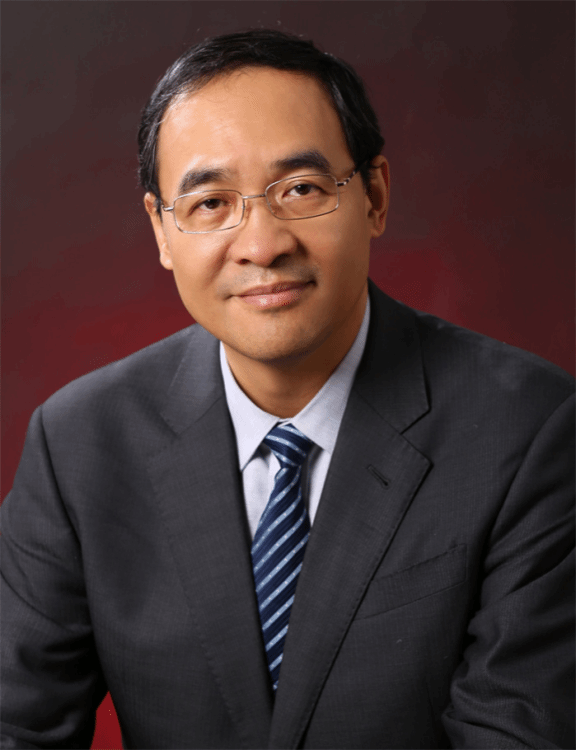
Sun Hongbin, born in October 1969 in Tiantai, Zhejiang Province, received his bachelor’s and doctoral degrees from the Department of Electrical Engineering, Tsinghua University in 1992 and 1997, respectively. He currently serves as the President of Taiyuan University of Technology, a Tenured Professor at Tsinghua University, Chief Scientist of the Shanxi Energy Internet Research Institute, and Chief Scientist for Polar Clean Energy at the Polar Research Institute of China. He is a recipient of the National Science Fund for Distinguished Young Scholars, was appointed as a Changjiang Scholar Distinguished Professor by the Ministry of Education, has been selected into the National High-Level Talent Special Support Program as a leading talent, and serves as the academic leader of a Creative Research Group of the National Natural Science Foundation of China. He has been elected as a Fellow of the Institute of Electrical and Electronics Engineers (IEEE Fellow), a Fellow of the Institution of Engineering and Technology (IET Fellow), and a Fellow of the Chinese Society for Electrical Engineering (CSEE Fellow). He also holds several concurrent positions including Member of the IEEE PES Fellow Committee, Vice-Chair of the Committee on Energy of the World Federation of Engineering Organizations (WFEO), Inaugural Chair of the IEEE Energy Internet Coordinating Committee, Founding Chair of the IEEE Conference on Energy Internet and Energy System Integration, and Founding Editor-in-Chief of the Energy Internet journal.
Professor Sun is one of the pioneers in the field of energy internet. He has long focused on the core issue of “Complex Energy Network Operational Regulation” and has achieved significant landmark results in three key areas: energy circuit analysis theory, voltage control technology, and energy regulation technology. Addressing the disciplinary barriers in constructing new energy systems, he proposed the concept of “Energy Circuit,” extending the theory of “Electrical Circuit” to “Energy Circuit” theory, which unifies the mathematical models for heterogeneous energy flows like electricity/gas (hydrogen)/heat (cold), providing a unified theoretical foundation for modeling and analyzing the energy internet. To tackle the challenge of voltage instability and the risk of large-scale blackouts caused by integrating renewable energy sources like wind and solar into power grids, he invented automatic collaborative voltage control technology, leading the development of the first large-scale industrial software for automatic voltage control in complex power grids, which has been widely applied to ensure voltage security in China’s massive power grids, overcoming a major bottleneck hindering the rapid development of renewable energy in China. Confronting frequent cross-energy-flow safety incidents and limitations in renewable energy consumption due to a lack of coordination among multiple energy flows, he invented collaborative energy regulation technology for heterogeneous multi-energy flow networks such as electricity, gas, and heat, leading the development of the world’s first integrated multi-energy flow energy management system, applied in over 30 cities, ensuring the safe and efficient operation of multi-energy flow systems. He has also pushed boundaries in extreme environments, overseeing the establishment at the Antarctic Qinling Station of the world’s first large-scale polar clean energy system primarily based on new energy, advancing Antarctic scientific expeditions into a new era of “green energy.”
Professor Sun has made systematic and creative contributions to safeguarding China’s energy security and supporting the low-carbon energy transition. He has powerfully promoted the formation and development of the frontier interdisciplinary field of energy internet, generating significant influence both domestically and internationally. As the first completer, he has received one National Science and Technology Progress Award (First Prize) , and one National Teaching Achievement Award (First Prize), and one National Technology Invention Award (Second Prize, ranking second). His work has been selected twice as one of the Chinese Universities Top Ten Great Scientific and Technological Progresses. He has also won the National Distinguished Teacher Award, the inaugural Energy Internet Pioneer Award, and the FEIAP Engineer of the Year 2022 award.


 Go Back