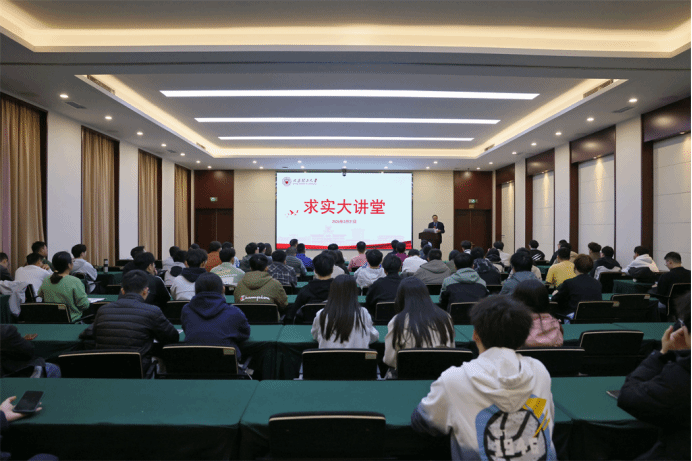
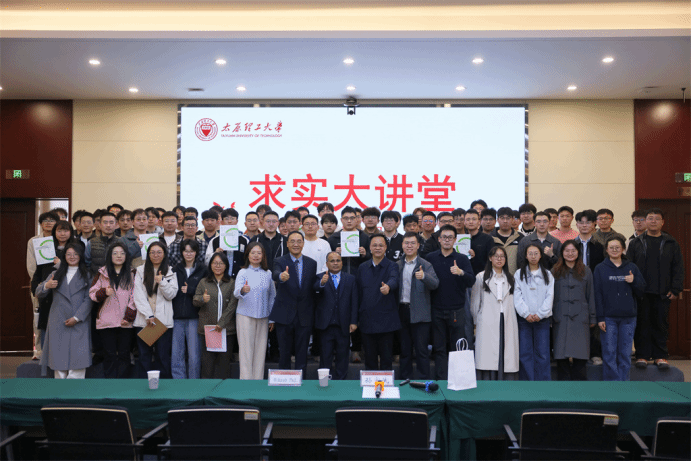
On the afternoon of March 31, Professor Bikash Pal from Imperial College London (ICL), who is also a Fellow of the Royal Academy of Engineering (UK) and a Foreign Member of the Chinese Academy of Engineering, was invited to TYUT’s “Qiushi Lecture Series.” He delivered a keynote lecture titled “Stability Modelling and Analysis of Converter Driven Power System” in the conference room on the first floor of the Conference Center, Yingxi Campus. The lecture was hosted by TYUT’s President, Professor Sun Hongbin. The lecture was attended by the head of the College of Electrical and Power Engineering, as well as faculty and student representatives from relevant disciplines.
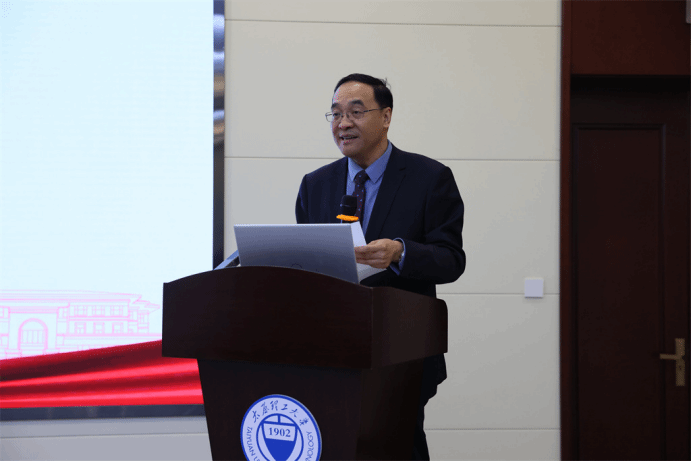
Professor Pal’s presentation focused on the evolving stability challenges within new power systems. He systematically introduced the modeling approaches, analytical methods, and engineering insights related to converter driven power systems. He elaborated on the new challenges and requirements for power system stability research under high penetration of power electronics. The lecture was academically cutting-edge, closely aligned with engineering practice, rich in content, and logically rigorous, providing the audience with a comprehensive understanding of frontier issues and development directions in the relevant field.
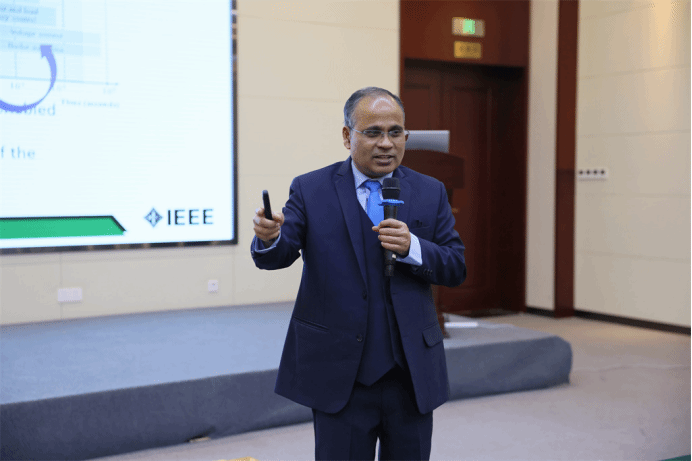
During the lecture, Professor Pal began by examining the time scales and stability classifications of dynamic phenomena in power systems, analyzing new characteristics of current power system stability issues. He noted that with the widespread application of converter-interfaced generation and loads, the traditional framework for stability analysis is undergoing profound changes. Electromagnetic transient processes, control coupling effects, and emerging instability phenomena are becoming key research focal points. Addressing this trend, Professor Pal systematically explained the new features in modeling, analysis, and classification of stability issues in new power systems, emphasizing the need for a more refined perspective to understand the stability mechanisms of such systems.
A central part of the report was dedicated to stability modeling and analysis using impedance-based methods. Using typical converter devices and system examples, he illustrated the fundamental processes of dynamic characteristic identification, model fitting, and stability margin assessment. He pointed out that in complex grid environments, factors such as device control parameters, grid strength, and control delays significantly impact system stability, imposing higher demands on modeling accuracy and analytical methods. Through a combination of theoretical analysis and simulation validation, the report further demonstrated the crucial role of detailed models in revealing system operational characteristics and potential risks.
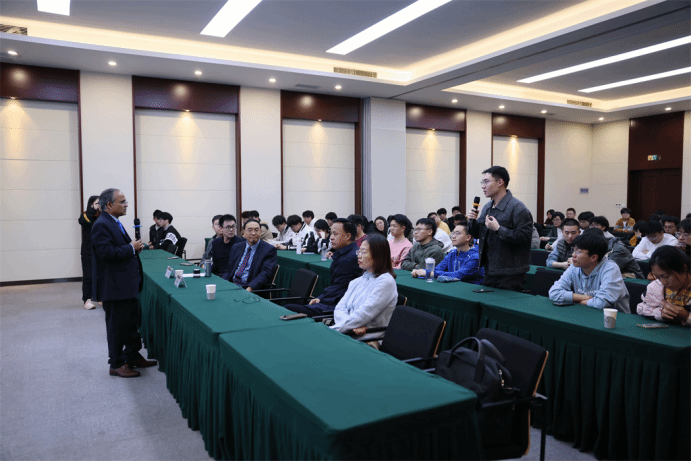
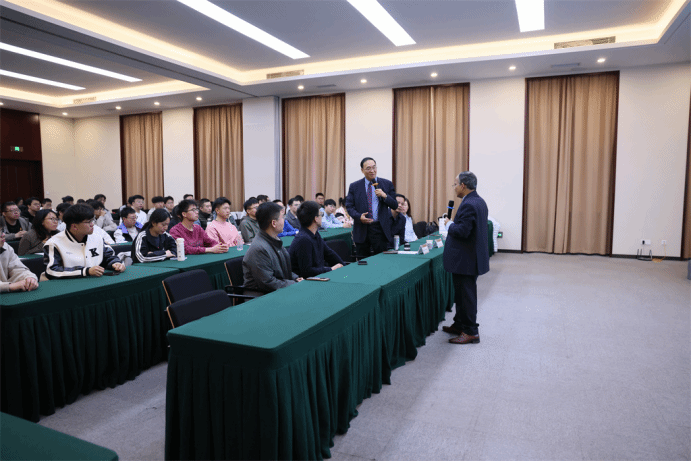
Concluding the report, Professor Pal offered targeted engineering recommendations based on his research findings. He emphasized that when conducting grid-integration research and stability assessments for new power systems, full attention should be paid to detailed model analysis at the electromagnetic transient scale. He stressed the need to systematically consider the effects of varying grid strengths, control strategies, and key parameter changes on system stability, and to further refine relevant technical requirements. The lecture was thematically clear and intellectually rich, not only deepening the audience's understanding of stability issues in converter-driven power systems but also providing valuable inspiration for scientific research and engineering practice in related fields.
【Scholar Biography】
Professor Bikash Pal works in the Department of Electrical and Electronic Engineering at Imperial College London (ICL). He is a Fellow of the Royal Academy of Engineering (UK), the Chinese Academy of Engineering (Foreign Member), and the Indian National Academy of Engineering, and an IEEE Fellow. He is also the President-Elect of the IEEE Power & Energy Society (PES) and a Foreign Fellow of the Chinese Society for Electrical Engineering (CSEE). He has long been engaged in research on power system stability, control, and state estimation. Professor Pal has led the EPSRC-NSFC UK-China Joint Research Programme on Sustainable Energy and the 6-university ROSES research consortium. He has deep collaborations with global industry leaders such as Siemens, GE, ABB, and National Grid UK, with his core research outcomes achieving global industrial deployment. His developed 68-bus power system model has been officially adopted by the IEEE as an international benchmark test system. Professor Pal has served as Editor-in-Chief of a leading international power journal, Vice President of Publications for IEEE PES, and an IEEE Distinguished Lecturer. He has published over 140 papers in IEEE Transactions and authored 4 academic monographs, establishing himself as one of the world's leading authorities in the field of power systems.


 Go Back