To deepen exchange and cooperation between Taiyuan University of Technology (TYUT) and Egyptian Chinese University (ECU), 21 faculty and students from ECU crossed mountains and seas in the summer of 2026 to complete a 21-day in-depth study program in Shanxi. The program was jointly funded by the China Scholarship Council and the international exchange funds under our university’s “10-Billion-Yuan Project.” It was not only a continuation and further enrichment of the six-year friendship between the two universities, but also a youth event focused on the frontiers of artificial intelligence and digital innovation. It has effectively promoted the substantive development of the “Study in Shanxi” brand.
Opening: Mountains and Seas Are No Distance When Hearts Are Connected Along the Silk Road
On July 16, Air China flight CA830 landed at Beijing Capital International Airport. After transferring to a high-speed train and arriving at Taiyuan South Railway Station, the 21-member ECU delegation of faculty and students officially began their time at TYUT.
As early as the summer of 2025, civil engineering students from ECU visited TYUT. In July of the same year, Ren Xiying, Vice President of TYUT, led a delegation to Cairo for a return visit and signed the “Academic Cooperation Project Agreement”.
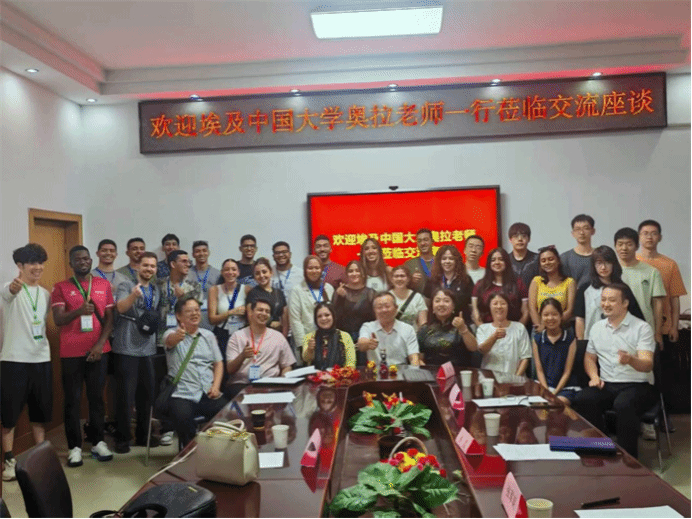
“From Cairo to Taiyuan, the straight-line distance is more than 7,000 kilometers, but our hearts are close,” said Ola, the faculty lead of the delegation, at the symposium that followed. As the head of the Department of International Cooperation put it at the closing ceremony, this exchange was a vivid practice of implementing the education opening-up and deepening international cooperation under the Belt and Road Initiative.
Language Nurtures Aspirations: Immersed in Exhibition Halls for Insights into China
To help the Egyptian students break down language barriers, the delegation’s program was designed around a dual-track model of “immersive Chinese classes + scenario-based cultural experiences.”
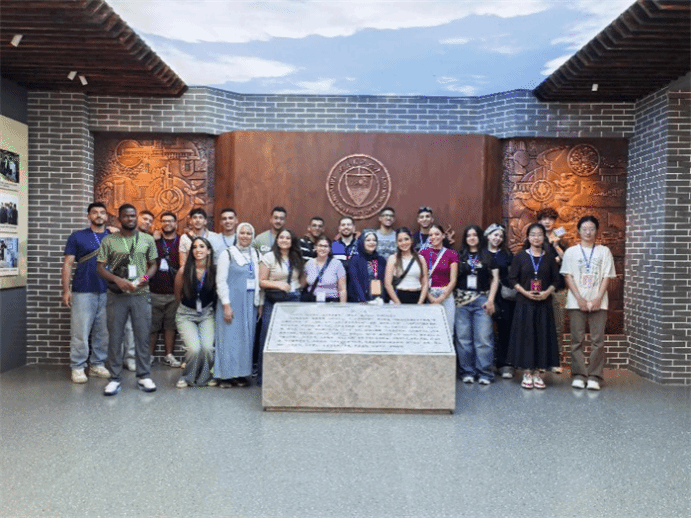
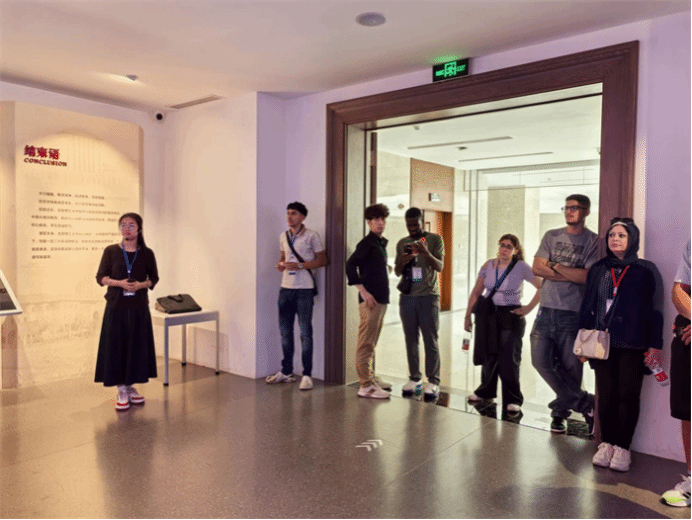
On the morning of July 17, the ECU delegation visited our University History Museum. In its 1,040-square-meter exhibition hall, more than 630 old photographs, more than 150 physical artifacts, and 13 video screens playing university-history documentaries laid out before them a timeline running from the School of Western Studies of Shanxi Imperial University in 1902 to today’s national “Double First-Class” university.
On July 18, they visited the Shanxi Museum. Facing the exquisite bird-shaped zun (bronze wine vessel), the students marveled at the depth and richness of Bronze Age civilization; in the exhibition area on Shanxi merchants, the complex remittance system of the piaohao (draft banks) sparked discussion about financial wisdom.
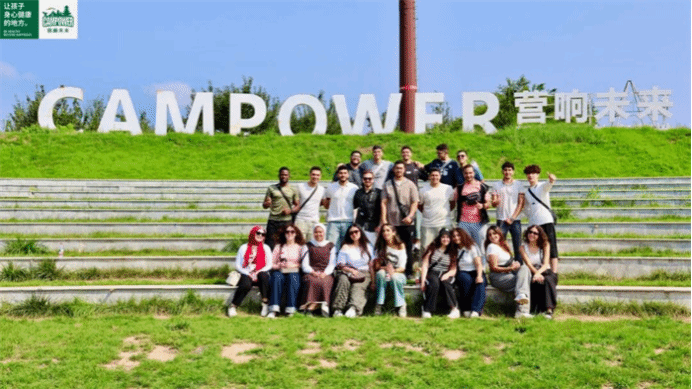
If the museum was an echo of history, then the Yingxiang Future · Qianqu International Education Camp on July 25 struck a chord of youthful vitality. The event, “Youth Friendship: China and Egypt United in Heart,” became the “first seed” of school-enterprise cooperation to take root.
Engineering Wisdom Gathered: Immersed in Labs for Future Innovation
As a university known for its strength in engineering, TYUT prepared an academic feast for the Egyptian students. The exchange focused closely on fields such as mechatronics, software engineering, and artificial intelligence.
On the morning of July 22, the faculty and students visited the National Innovation Center for Intelligent Lighting and Smart Wearable Technology (under preparation), where they experienced intelligent lighting scenarios through MR (mixed reality) glasses. Long-term joint research will be carried out on topics such as smart-city lighting and electromagnetic compatibility technology, marking a shift in cooperation between the two universities from simple faculty-student visits toward substantive scientific research co-creation.
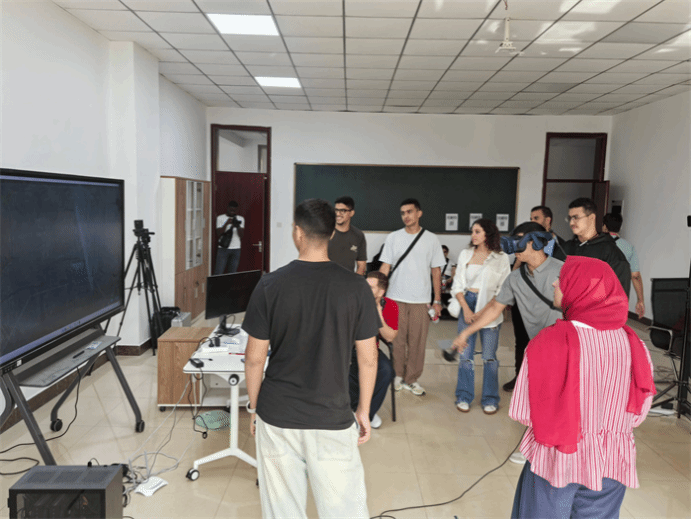
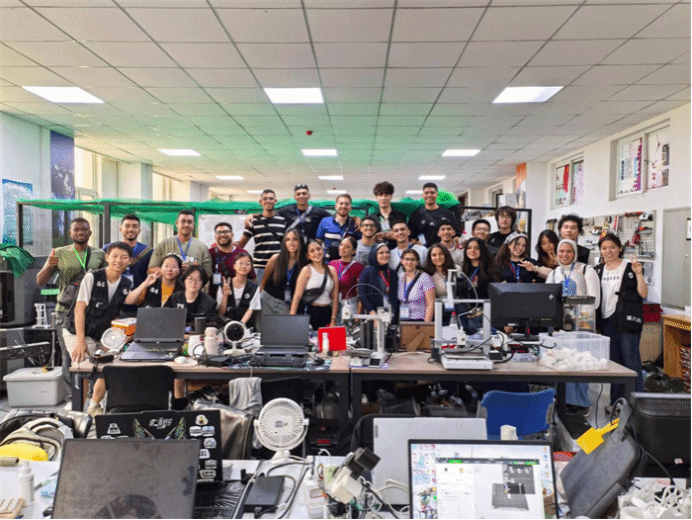
The ECU teachers and students also visited the Intelligent Transportation Innovation Practice Base at Mingxiang Campus. A line-following demonstration by the driverless cars of the Jinbao Intelligent Vehicle Team and the infantry robots of the TRoMaC mecha team were displayed on the same site. This student team has won 19 first prizes in national intelligent vehicle competitions and reached the national top eight in RoboMaster.
Knowledge Unites Action: Tuned to Urban Rhythms for a True China Insight
The delegation visited the Artificial Intelligence Experience Hall at iFLYTEK’s Shanxi headquarters base. The company’s tenet, “to enable machines to listen and speak, to understand and think,” instantly propelled the Egyptian students from campus laboratories to the forefront of industry.
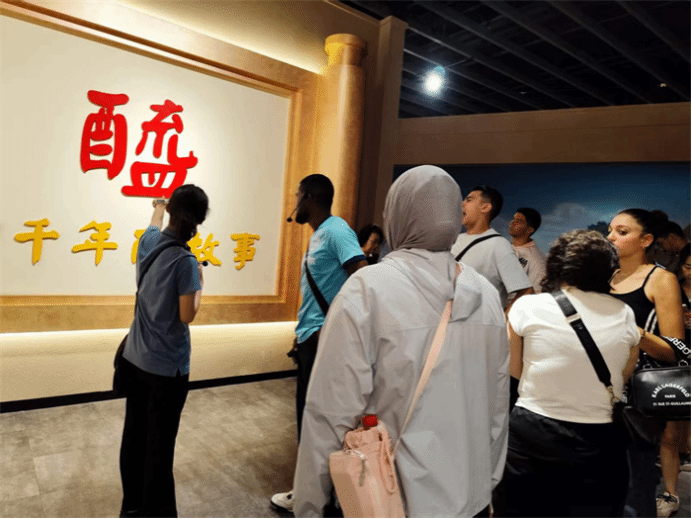
The delegation visited the Zilin Vinegar Industrial Park in Qingxu, the “Vinegar Capital of China.” At the Sanjin Vinegar Garden Culture Exhibition Hall, holographic projections unfolded the history of vinegar around the world together with Shanxi’s 82 intangible cultural heritage procedures in five steps: steaming, fermenting, smoking, leaching, and aging. Visitors could view the large-scale mechanized brewing workshop, solar-powered aging area, and fully automatic filling line all at once.
Arts Converging: Inspired by Cultural Exchange for Mutual Understanding
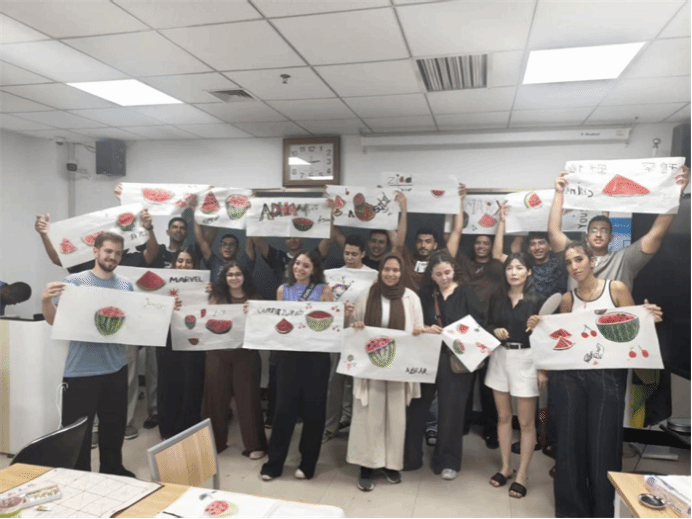
The cultural experience classes fully embodied elegant oriental charm. In the traditional Chinese painting studio, the Egyptian students took up brushes to copy works, appreciating the integrity symbolized by the “plum blossom, orchid, bamboo, and chrysanthemum.” Some students even blended Nile fish motifs with Chinese paper-cut window decorations, cutting out unique artworks.
Epilogue: This Serves as the Prologue for Promising Future Cooperation
On the afternoon of August 3, at the learning-outcomes summary and report session, the participants took the stage one after another to share their reflections: “Thank you, Taiyuan University of Technology. Here there are not only advanced laboratories, but also warm relationships between teachers and students.” “I will take what I have seen and heard in China back to Egypt and become an ambassador of China-Egypt friendship.”
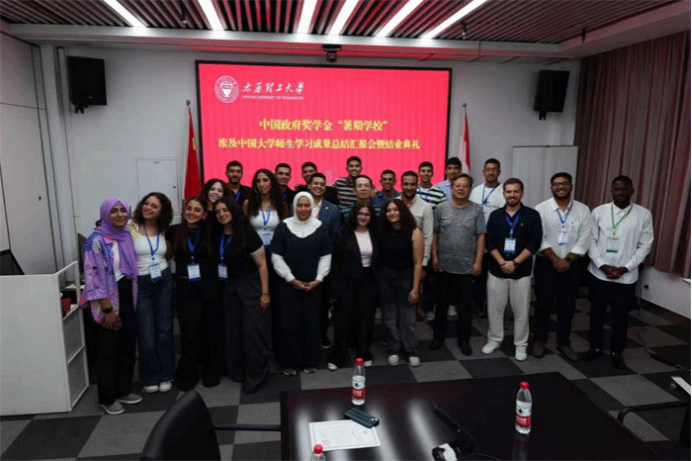
The head of the Department of International Cooperation stated that the purpose of this program was to build a solid bridge for cross-cultural exchange, so that more Egyptian youth could perceive a real, multidimensional, and modern China at TYUT and, after returning home, work hard to grow into ambassadors who “understand China and are friendly to China.” Professor Zhang Junchao echoed: “Completion is not an end, but a brand-new starting point for continued exchange and deeper bilateral cooperation.”
Mountains and seas separate us, yet we gather as one; hand in hand, we march toward a promising future. The success of this delegation serves as a vivid microcosm of the university’s commitment to open education. Moving forward, TYUT will keep building high-quality platforms for China-Egypt youth exchanges, academic dialogue, and industry-academia-research joint development.


 Go Back