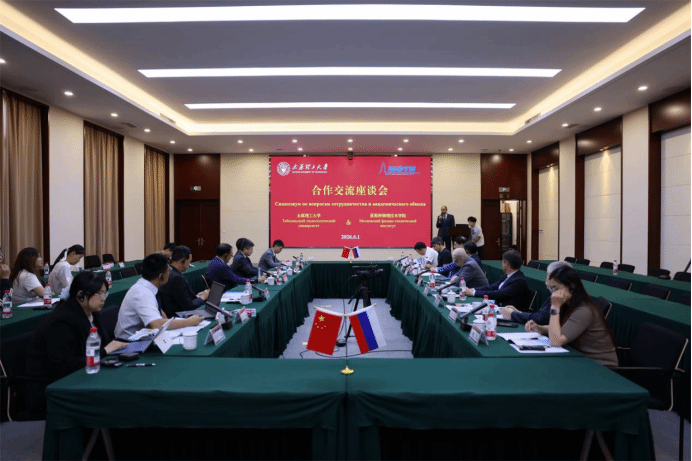
On June 1, a symposium on cooperation and exchange between TYUT and the Moscow Institute of Physics and Technology (MIPT) was held at the Yingxi Campus. The symposium was addressed by Dmitry Livanov, Rector of MIPT, and Sun Hongbin, Member of the Chinese Academy of Sciences and President of TYUT. The symposium was chaired by TYUT Vice President Sang Shengbo. Attendees included the MIPT delegation, representatives from Coway International Techtrans Co., Ltd., and the heads of TYUT’s International Cooperation Department, the College of Electrical and Power Engineering, and the Shanxi Energy Internet Research Institute.
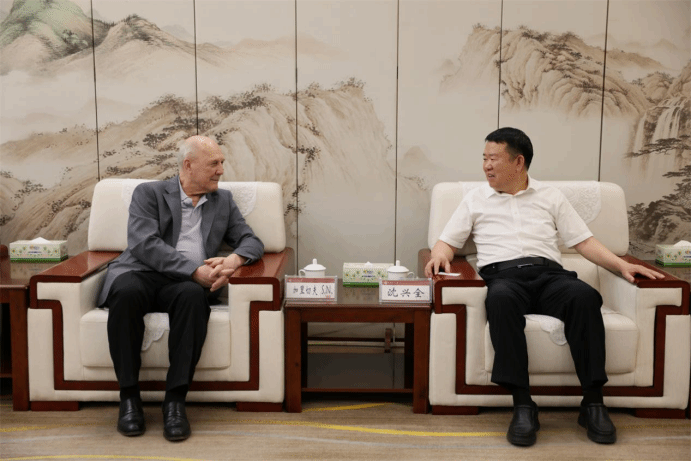
Prior to the symposium, Secretary of TYUT Party Committee Shen Xingquan met with the head of the MIPT delegation, Sergey Garichev, Director of Research, Development and Commercialization at MIPT. The two sides exchanged views on joint cultivation of high-level talents, collaborative research on key technologies for polar scientific expedition energy support, and joint establishment of international research platforms, and discussed elevating the strategic cooperation level between the two universities and promoting the implementation of practical projects.
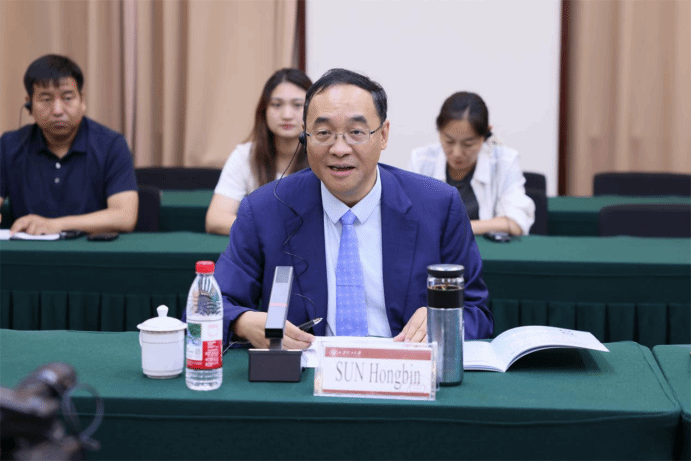
During the symposium, Sun Hongbin, on behalf of TYUT, extended a warm welcome to the MIPT delegation and introduced TYUT’s history, disciplinary characteristics, research platforms, and development plans. He noted that MIPT is a leading university in physics and technology in Russia, with deep strengths and distinctive features in fundamental physics, engineering technology, and cutting-edge energy research. As a national “Double First-Class” university, TYUT has long served national energy strategies and the transformational development needs of Shanxi Province, with notable advantages in fields such as energy internet and polar clean energy. He emphasized that this inter-university collaboration represents a key step in TYUT’s internationalization strategy. Using the Russian Arctic International “Snowflake” Station hybrid energy complex project as a driver, TYUT will integrate its strengths in disciplines, research platforms, and innovation teams to carry out deep cooperation with MIPT in joint talent cultivation, collaborative research, and technology transfer and application, striving to create a model project for Sino-Russia university cooperation in clean energy technology for extreme environments.
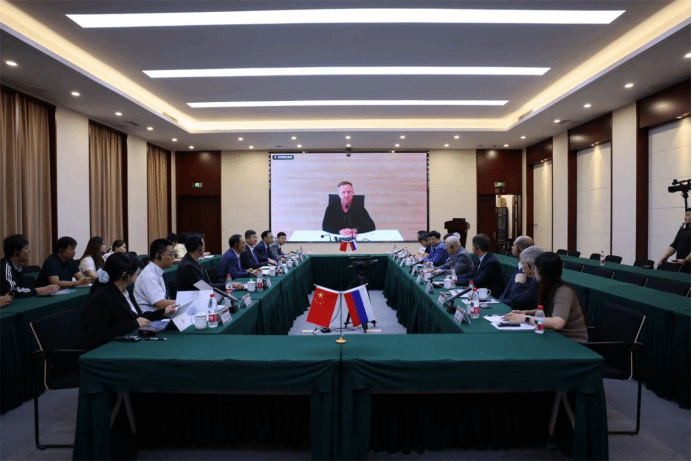
Dmitry Livanov, in his address, introduced MIPT’s education system, key laboratory development, and research focus on new integrated energy and autonomous energy equipment. He noted the significant potential for Sino-Russia scientific and educational cooperation, highlighting that TYUT possesses mature engineering application research and industrial implementation experience, which complements MIPT’s strengths in cutting-edge energy technology, extreme environment equipment, and high-level talent cultivation. He expressed hope that, taking this symposium and the signing of a memorandum of understanding (MOU) as a new starting point, the two sides would establish a regular communication mechanism, continue faculty and student exchanges, academic seminars, and project collaboration. He also hoped they would focus on joint research into key hybrid energy technologies, pushing more collaborative outcomes from the laboratory to engineering applications, thereby adding new depth to Sino-Russian scientific and educational cooperation.
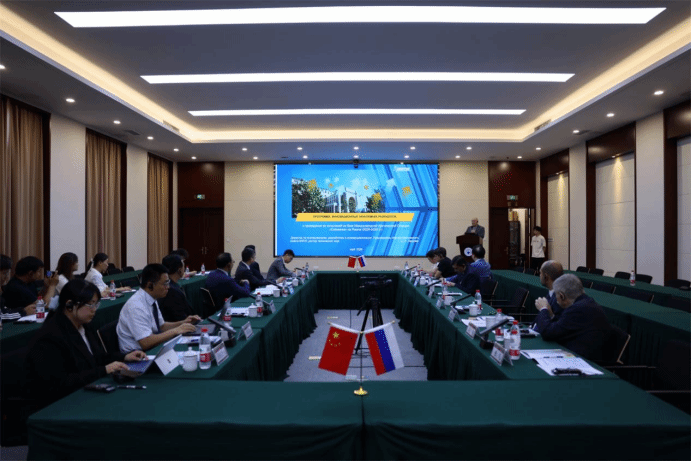
Garichev delivered a thematic academic report on the background, technical roadmap, and research plan for the Snowflake Station project.
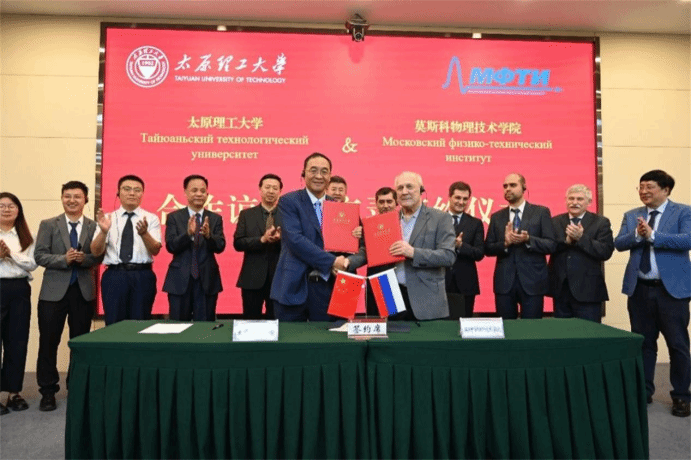
Subsequently, representatives from the Chinese and Russian sides signed the MOU on-site. Professor Sun Hongbin was appointed Chinese Chief Scientist of the “Snowflake International Arctic Station Hybrid Energy System” joint project and received an appointment certificate. The signing and appointment marked a new phase of project-driven, team-based, and mechanism-supported cooperation following earlier exchanges.
After the ceremony, MIPT delegation members Vibe, Tavberide, and Savelyev each delivered academic reports, focusing on the construction of hybrid energy complexes, infrastructure for extreme environments, and optimization of energy systems. Participants engaged in in-depth discussions on topics such as joint graduate training, collaborative research platforms, key technology research, and technology industrialization.
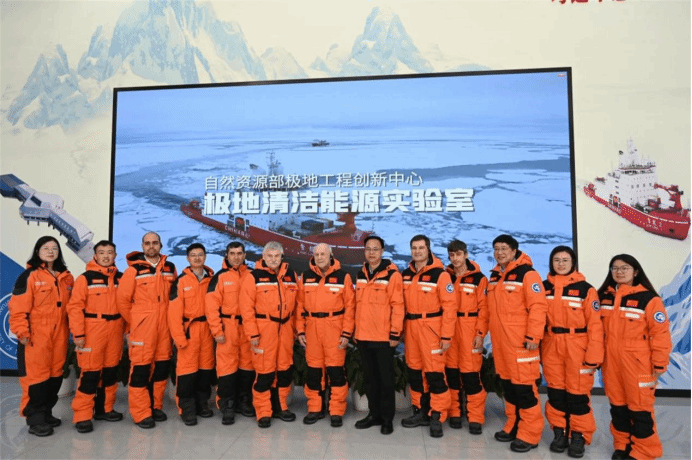
During their visit, Garichev and his delegation toured the Shanxi Energy Internet Research Institute and the Polar Clean Energy Laboratory, learning in detail about TYUT’s platform development, research progress, and application scenarios in energy internet, integrated energy systems, and polar clean energy technologies. The delegation focused on the Polar Clean Energy Laboratory’s capabilities in simulating extreme polar conditions such as extreme cold, high winds, and blizzards, as well as comprehensive testing and verification of energy equipment. These platforms provide technical support and data assurance for the deployment of polar clean energy systems, laying a solid foundation for future joint experiments, equipment validation, and engineering demonstrations.
This cooperation and exchange represents an important step by TYUT in implementing key agreements reached between President Xi Jinping and Russian President Vladimir Putin and deepening high-level Sino-Russian scientific and educational cooperation. Going forward, TYUT will take the signing of the MOU as an opportunity to continuously improve inter-university coordination mechanisms, promoting integrated progress in joint research, talent cultivation, platform development, and technology transfer. TYUT aims to produce a number of exemplary collaborative achievements in frontier areas such as polar clean energy, thereby contributing to national strategic needs and Shanxi Province’s comprehensive energy reform pilot initiative.


 Go Back